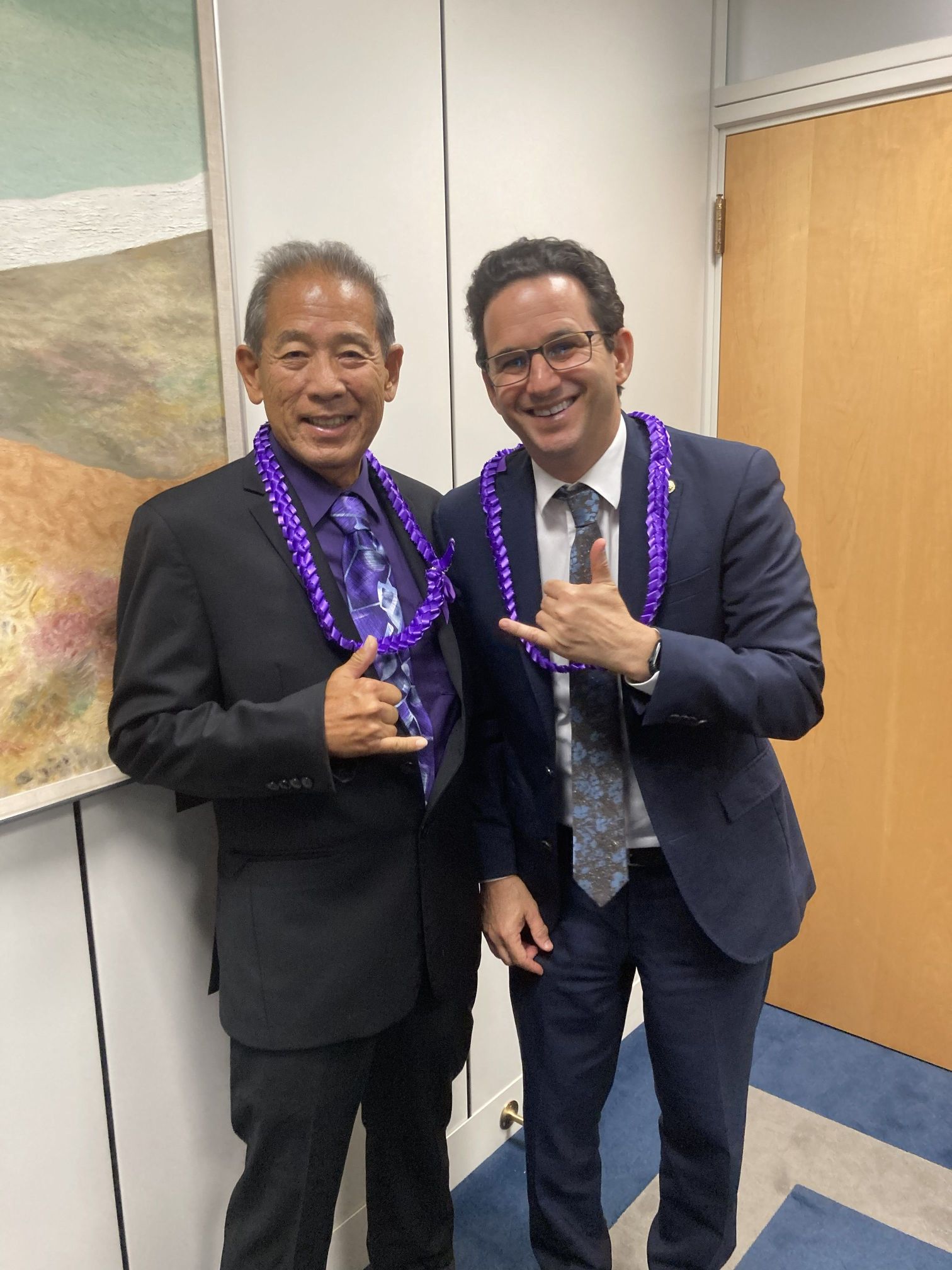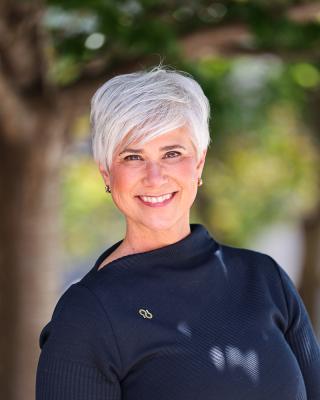
Beth McMullen
Each month, we’re featuring an advocate who engages with policymakers to ensure priorities that improve the lives of people impacted by Alzheimer’s and all other dementia remain top-of-mind in Congress.
Calvin Hara of Hawaii spent years running senior care communities before Alzheimer’s touched his own family. Now as an AIM advocate, he draws on both his career in dementia care and the personal experience of caring for a mother and an uncle who both lived with dementia. Over the past 10 years, that combination has shaped how he approaches advocacy in Hawaii — one relationship at a time.
“I was a long-term care administrator, nursing home administrator, assisted living, for a total of close to 30 years, mainly in California up in the Sacramento area,” said Calvin. But by the time Calvin returned to Hawaii, dementia was no longer just part of his career — it was part of his family. His mother developed vascular dementia following a series of strokes, and his uncle also experienced dementia toward the end of his life.
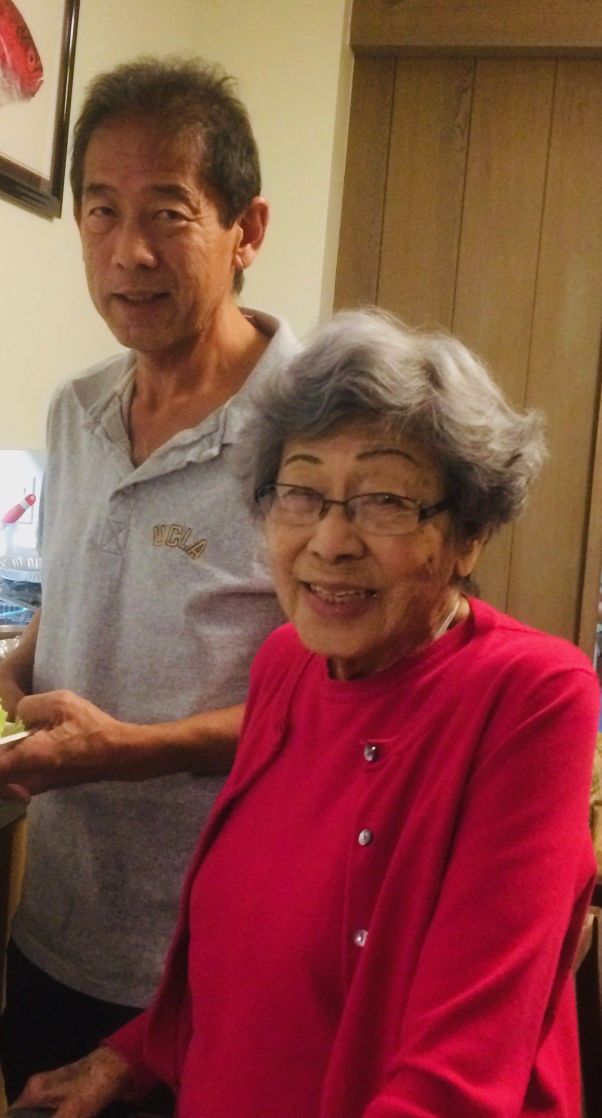
Even with decades of professional experience, Calvin found himself in a new role when his mother’s memory loss began affecting the family — guiding his brother, who had no background in caregiving, through something he was witnessing for the first time. “He was not at all involved with seniors or any other illnesses,” Calvin said of his brother. “He’d say, ‘She keeps asking the same question — what do you tell her?’ I said, ‘I tell her the same answer … she just doesn'’t remember.’”
Calvin remembers how his mother’s relationship to his visits shifted after she moved into a senior community. “The first year, she would say, ‘You don’t have to come every day,’ because I would go visit her every day,” Calvin said. “In the second year of her stay there, when I would be ready to leave, she’d say, ‘Are you coming tomorrow?’”
When Calvin moved home to Hawaii, he was introduced to the Alzheimer’s Association’s Hawaii Chapter. Advocacy is where he landed first, and he’s stuck with it for the past 10 years. Even when the pandemic hit, Calvin found new ways to stay involved. “There was still a need for community education,” Calvin said, “so I did a whole bunch on Zoom.” He found the virtual sessions made a difference. “The challenge of just being on the screen still was very helpful, I think, for people out there. People were looking to have interaction,” Calvin said. “They couldn’t do the in-person, but certainly, by Zoom, that provided that education and the help.”
This year, Calvin brought his career-and-caregiver perspective to the closing morning of the 2026 AIM Advocacy Forum, joining a caregiver panel alongside fellow advocates Liana Redshaw and Sally Oelschlager Vulich. “When we hear about screening, a blood test for Alzheimer’s, that means hope,” Calvin told the Forum audience. “Our children and grandchildren hopefully will not need to have a discussion about how to care for someone with Alzheimer’s.”
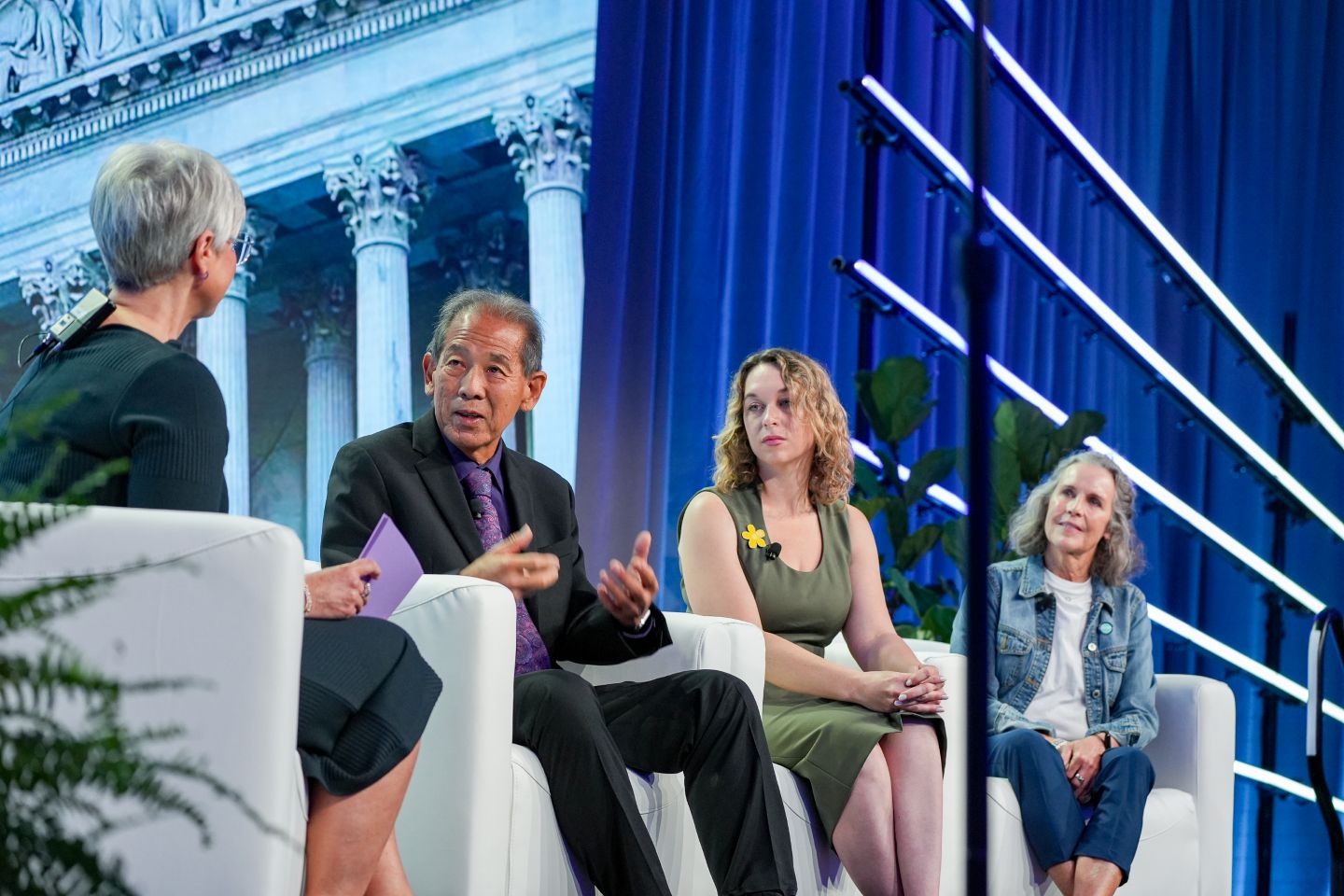
It’s a message that reflects why Calvin keeps making the long trip from Hawaii — this marked his eighth time attending. While there, advocates like Calvin urged their members of Congress to support the Alzheimer’s Screening and Prevention (ASAP) Act to accelerate access to dementia blood tests.
Relationship-building has been at the center of Calvin’s advocacy. He remembers introducing himself to Rep. Ed Case at a town hall meeting before he was elected to represent Hawaii’s 1st Congressional District. “I didn’t know him, he didn’t know me, I just introduced myself,” Calvin said. He sat down next to a woman he didn’t recognize. “Well, it turns out that was his wife,” Calvin said. “I said to myself, wow, great opportunity. So, I asked, ‘Would you mind giving this folder [with information about Alzheimer’s Association policy priorities] to your husband?’”
Years of meetings with Rep. Case and Hawaii’s other policymakers have taught Calvin that no two are alike. “You have to know that so you can help elected officials hear the message that we’re getting across,” Calvin said. “Because it’s not a one size fits all.”
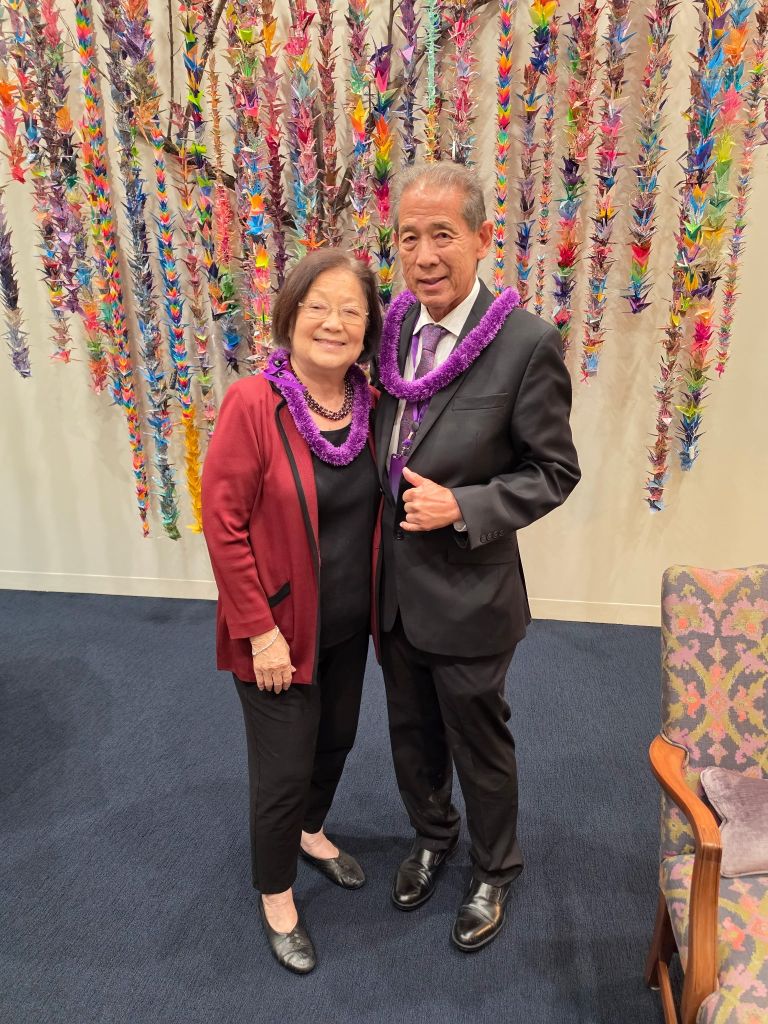
Meetings on Capitol Hill are often brief, squeezed between votes and the other demands on a lawmaker’s schedule. “But we quickly get in what we need to say,” Calvin said. Familiarity helps, too — after years of repeat visits with the same congressional staff, he’s noticed those relationships get easier over time. “She’s much more relaxed, she feels more comfortable with us,” he said of one longtime staffer he’s come to know well.
That consistency from Calvin and his fellow advocates has helped translate into results at both the state and federal level. In Hawaii, advocates secured a $3 million annual state appropriation to establish the HANAI Memory Network Program, signed into law in July 2026. The funding is aimed at improving early diagnosis, care navigation and treatment access, particularly for rural and neighbor island communities. Early into the legislative session, lawmakers had warned advocates not to expect much this year. “All of them said, ‘This is going to be a tough year. The economy’s tough, federal level, state level. You really should take a look at that dollar amount,’” said Calvin. But Calvin explained that their persistence paid off, and the funding was secured.
That same persistence has helped translate into results at the federal level, including the BOLD Infrastructure for Alzheimer’s Act. Because of his professional experience and background, Calvin was particularly passionate about advocating for BOLD because of its impact in local communities. “Finally, Congress got [BOLD] through, and monies were available for states to apply. Then we saw the State of Hawaii, our Executive Office of Aging, got some funds. And now it’s continuing … full implementation.” For Calvin, that funding is critical because of Hawaii’s geography. Outside of Oahu and Honolulu, most of the state is rural, and access to specialists is a real barrier for families living with Alzheimer’s and other dementia. “Some on the islands have no specialists, so the only way to get to see a specialist is to get on a plane,” Calvin said. “In our case, you can’t drive, I mean, you have to get on a plane. And the costs associated, right? So if you’re on Medicaid, that’s pretty tough.”
Consistency from advocates like Calvin has built a reputation that outlasts any single meeting. Calvin recalled running into former Rep. Colleen Hanabusa years after she’d left Congress. “I knew she wouldn’t remember me,” Calvin said, “but I said, ‘I saw you on Capitol Hill,’ and she said, ‘You guys were the Sea of Purple.’”
From a three-decade career in senior care to a decade of advocacy, Calvin Hara has spent his life showing up for people affected by Alzheimer’s and other dementia. His story is a reminder that advocacy doesn’t require a big single defining moment — it requires showing up, building relationships and staying focused on the common goal: a world without Alzheimer’s and all other dementia.
Become an advocate today and help AIM keep building the kind of relationships with Congress that turn hope into policy.