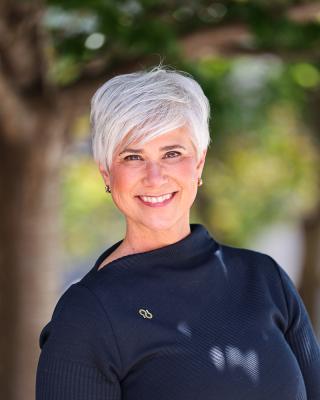
Beth McMullen
Each month, we’re featuring an advocate who engages with policymakers to ensure priorities that improve the lives of people impacted by Alzheimer’s and all other dementia remain top-of-mind in Congress.
Brett Denison was living in Colorado when her mother in North Carolina was diagnosed with cancer and her father’s Alzheimer’s symptoms started to surface. What followed was long-distance caregiving, a cross-country move, and ultimately, a role as one of North Carolina’s most effective advocates — helping build crucial support for the ASAP Act within the state’s congressional delegation.
Brett helped secure co-sponsorship of the ASAP Act from Rep. Alma Adams (D-N.C.) and, soon after, from her own member of Congress, Rep. Richard Hudson (R-N.C.). The ASAP Act would allow Medicare to cover blood tests for Alzheimer’s, giving families access to earlier detection at a moment when new treatments make that detection more meaningful than ever. For Brett, the case for the bill is deeply personal. “So many things could have changed [if my dad’s Alzheimer’s had been identified earlier],” she said. “The trajectory of everything, my dad’s terror, if we had more time.” She believes earlier detection could have changed how her own family’s story unfolded.
In the beginning, it was hard to know how much her father’s symptoms had progressed from nearly two thousand miles away. When they celebrated her parents’ 50th wedding anniversary, her father dropped her and her family off at the airport one morning but got lost trying to find his way home, ending up staying in a hotel instead for the night. Brett wouldn’t learn what happened until months later.
The full picture came into focus when her mother called one day in tears, worn down by what she’d been managing largely on her own. “We did not know how bad my dad’s Alzheimer’s had gotten,” Brett said. Already exhausted from her own cancer treatment, her mother felt guilty for losing patience with a husband who Brett describes as never having raised his voice at anyone in his life. “She didn’t know how many more times she had to tell him that he had to make his own food [since she was in bed from her cancer treatment],” Brett said.
Early on, Brett tried to convince her parents to move back to Colorado, where Brett and her family were living, so they could help directly. But her parents, who had spent more than 20 years in Colorado before moving to North Carolina, weren’t willing to go back to the cold — so for a while, it was North Carolina neighbors who filled the gap. “I had a very good group that was watching over them, in the time before we got out [to North Carolina], which was wonderful,” said Brett.
Once Brett and her husband decided to move themselves to North Carolina, the pandemic delayed them further. When travel finally opened back up, she flew to North Carolina every month to help her parents. Brett’s mother passed away in January 2022, and shortly after, Brett’s family made the move. “My husband sold his business. We sold our house. We have two older kids that are still in Colorado, so it was just me, my husband, and our son,” said Brett. “He was 6 at the time.”
In the years since, that balancing act hasn’t let up. “I have a 10-year-old who is starting 5th grade. I have a full-time job... my father has advanced stage Alzheimer’s. He’s on full-time hospice.” Reflecting on the isolation that can come with caregiving for someone living with Alzheimer’s, she said it’s a weight she doesn’t want others to carry alone. “I don’t want other people to go through this feeling like they are on that island that I still occasionally feel like I’m on,” said Brett. “I have to bring myself back down and remember who’s there to catch me.”
That community has only grown through her involvement with the Alzheimer’s Association. The same North Carolina neighbors who’d once watched over her parents had also been encouraging Brett to seek out the Association. “They would oftentimes tell me that I should get involved with the Association, that I should get involved in a support group,” Brett said. “I didn’t feel like I had time.”
When she did become involved, advocacy gave her something she hadn’t expected: a community of people who completely understand — a small group of fellow North Carolina advocates she calls the Core Four. “We now go to every State Advocacy Day and AIM Advocacy Forum together. We are with each other through everything,” Brett said. “We’re on a group chat together. Everything that happens in our lives, I feel like that’s the first text.” Her involvement with the Alzheimer's Association also led her to a couple on their own journey — he’s living with early-onset Alzheimer’s, and his wife serves as his care partner — who’ve shown Brett firsthand the promise of newer treatments as they navigate his diagnosis together. She recruited them to join her and help build up advocacy in their area.
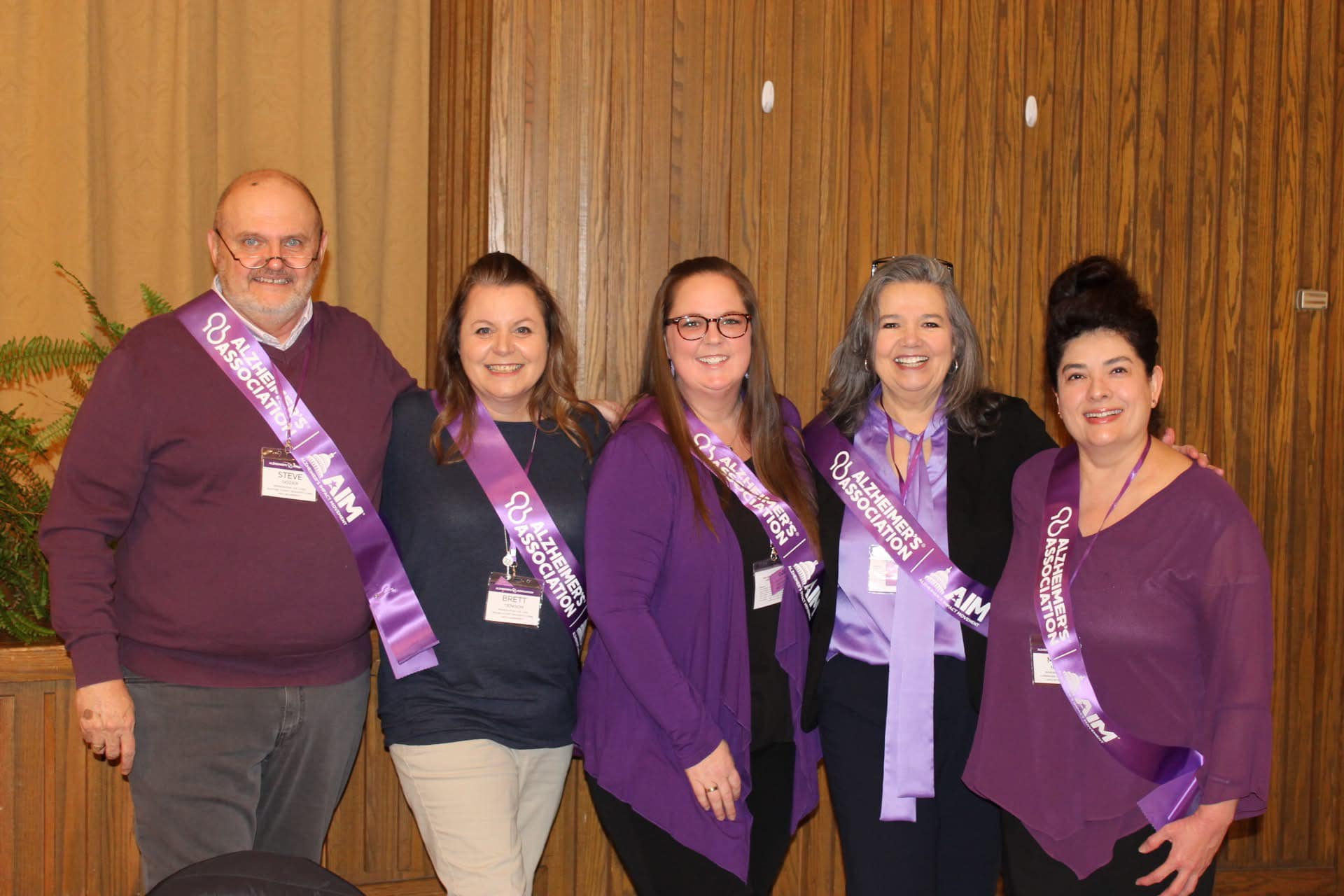
That sense of community has followed Brett to Capitol Hill. She remembers the first time her advocacy led to real legislative movement, on a call with Rep. Adams’ office. “It was the first time we used the mammogram analogy [to explain the urgency for the ASAP Act], and it was awesome,” Brett said. “The momentum that we had on this call, it flowed so smoothly.” Shortly after, she learned Rep. Adams had signed on to co-sponsor the bill. “I didn’t even know how to respond when I heard the news,” Brett said. “I know the others had had their wins before, but I hadn’t. I had goosebumps.”
Along the way, Brett’s also connected with the people working alongside members of Congress, including one congressional aide who, after getting to know Brett through repeat meetings, opened up about his own family’s connection to the disease. He’s grateful to Brett and other AIM advocates for sharing information that helped him seek treatment for his own loved one.
That same drive shows up back home in Moore County, too. When Brett first started attending her local Walk to End Alzheimer’s, advocacy wasn’t always represented. “There had been very little discussion about advocacy,” Brett said. “The last two years, we have brought in a table and volunteers and staff” to talk with attendees and help sign up new advocates. Brett and her fellow advocates now make sure every local Walk has someone there to talk about advocacy — and after years of showing up, Brett has become a familiar face in her own community. “Every business that I go to that’s involved in our Walk always asks me about my dad,” she said. “It means the world to me.”
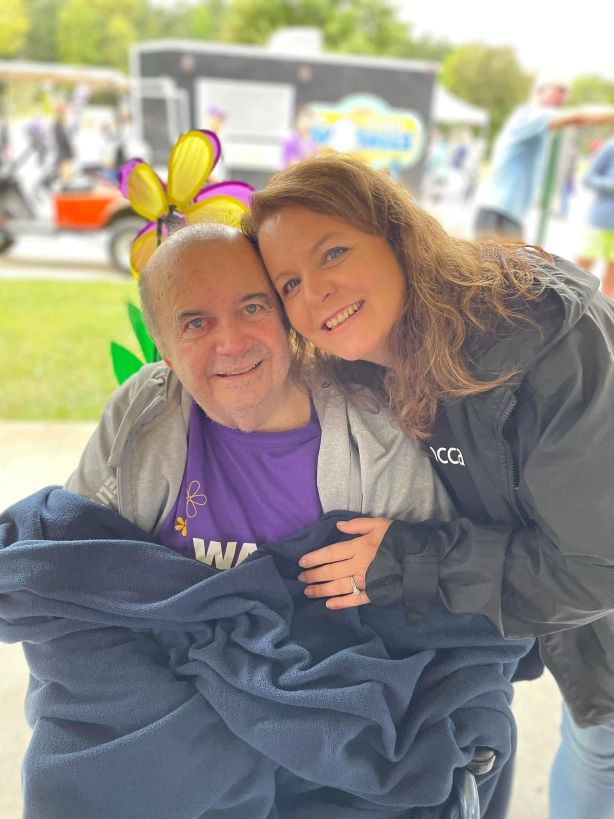
From navigating her parents’ health to helping secure co-sponsors for the ASAP Act, Brett Denison found her own community by turning one of the hardest chapters of her life into a source of hope — for her family, and for those who come after her.
If you’re ready to do the same, become an advocate today and help AIM keep advancing critical bipartisan legislation like the ASAP Act.