
Rachel Conant
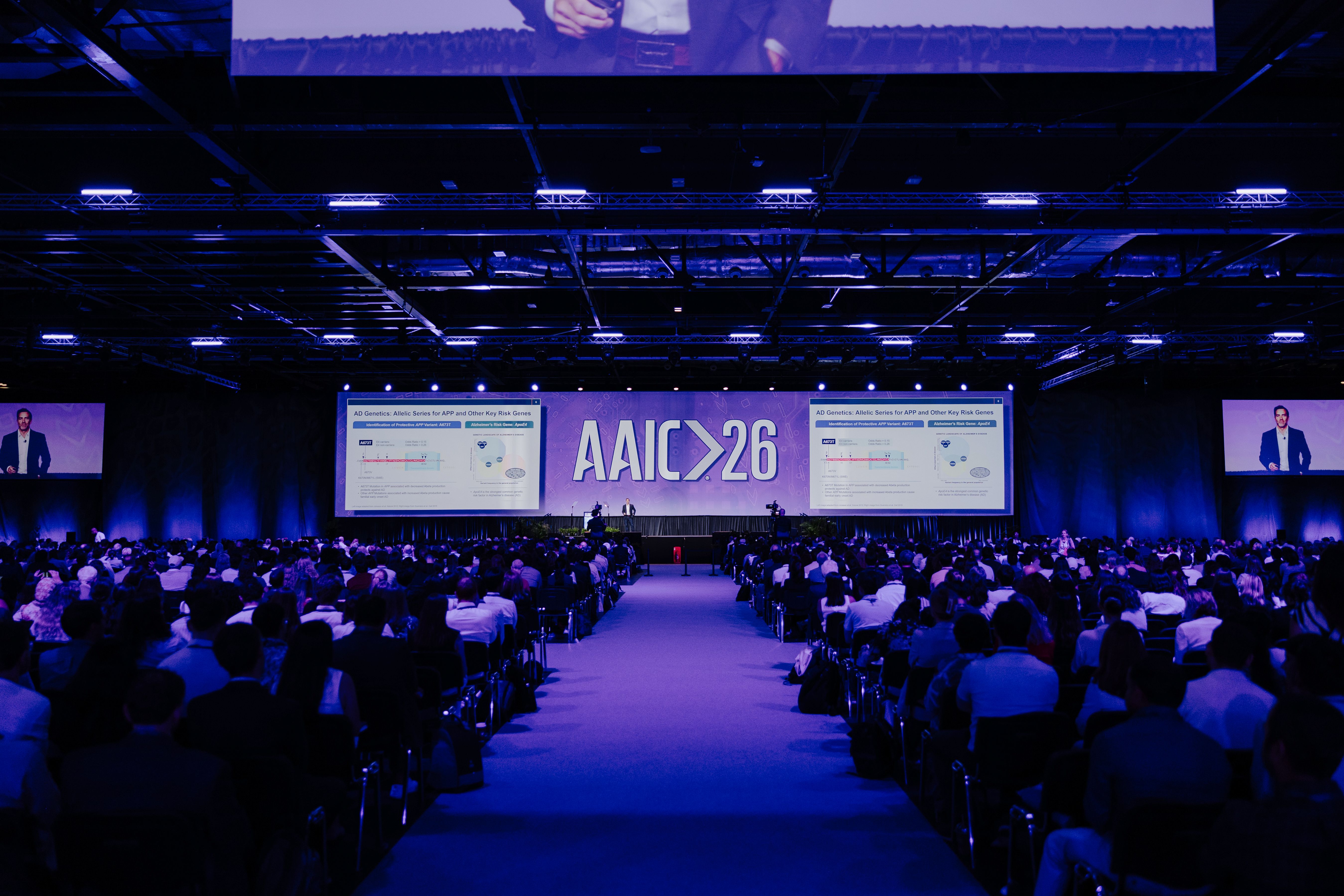
This week, the world’s leading dementia researchers gathered in London for the Alzheimer’s Association International Conference® (AAIC®) 2026. More than 11,600 basic scientists, clinical researchers, early career investigators, clinicians and members of the care research community registered for the largest international conference on dementia science. Attendees reviewed more than 5,000 in-person posters and 1,200 virtual posters, drawn from a pool of 7,887 abstract submissions, coming together to share theories, breakthroughs and best practices.

Federal research funding plays an essential role in this scientific progress. Alzheimer’s and dementia research funding at the National Institutes of Health (NIH) is at an all-time high. In February, Congress finalized a fiscal year 2026 spending package that included a $100 million increase for Alzheimer’s and dementia research, bringing total annual federal investment to approximately $3.9 billion — the highest level since the passage of the National Alzheimer’s Project Act.
Here are just a few of the research milestones being shared at AAIC:
-
Researchers presented new evidence that former elite soccer players show measurable brain health challenges in mid-life, including higher rates of depression and anxiety, subjective difficulties with thinking and decision-making, and differences in brain structure on MRI compared with a healthy comparison group.
-
New research showed that a blood test detecting elevated levels of p-tau217, a protein linked to Alzheimer’s disease, can help predict future cognitive decline in older adults who are currently symptom-free. Findings like these underscore the urgent need for the Alzheimer’s Screening and Prevention (ASAP) Act (S.3267/H.R.6130), which would remove the current legal barrier preventing Medicare from covering dementia screening tests.
-
The LatAm-FINGERS study shows that lifestyle interventions — tailored across Latin American cultures, health systems and communities — can improve memory, thinking and overall cognitive function in older adults at risk for cognitive decline and dementia, reinforcing earlier findings from the U.S. POINTER trial.
-
Building on that evidence, the Alzheimer’s Association announced $100 million to launch a first-of-its-kind global clinical trial testing whether pairing a proven lifestyle intervention with a metabolism-targeting drug, such as a GLP-1 agonist, can further reduce the risk of cognitive decline, mild cognitive impairment and dementia.
-
Researchers also shared results from the LiBBY trial, a study of a combined THC and CBD treatment for agitation in people with late-stage Alzheimer’s and other dementia. Nearly 9 in 10 participants who received the treatment showed overall improvement in target symptoms by week 12.
-
And Biogen presented Phase 2 results from its CELIA study, the first Phase 2 clinical trial evidence that a drug treatment can remove toxic tau tangles from the brain in people living with early Alzheimer’s disease, with slowing of clinical decline observed across multiple measures. Biogen has announced it will advance the program to Phase 3.
None of this progress happens without a reliable pipeline of federal research funding that lets scientists pursue the next question, the next trial, the next therapeutic target. The NIH’s own Professional Judgment Budget for fiscal year 2027 identifies $187.210 million in additional funding needed specifically for Alzheimer’s and dementia research. As Congress continues its appropriations process, the Alzheimer’s Association and AIM are urging lawmakers to build on the past decade of bipartisan progress.
Every finding presented in London this week exists for one reason: to help people living with Alzheimer’s and other dementia, and the families who love and care for them. More than 7 million Americans are living with the disease today, alongside nearly 13 million caregivers. For them, this research could be the difference between a diagnosis that comes too late and one that comes early enough to plan or start treatment while it can still help — and the hope that the decline they're watching in a parent, spouse or friend might someday be slowed or prevented altogether.
Sustained federal investment in research is how we get there.
Take action today and tell your members of Congress that continued NIH funding for Alzheimer’s and dementia research is worth the investment.