Rachel Conant
This article originally appeared in the 2026 Impact Report. Become a member today to get access to additional exclusive content, meetings and insights into the Alzheimer's and dementia public policy community.
The story of Sally Oelschlager Vulich and Skip Orlady began in a Minneapolis suburb, where they were high school sweethearts who went to prom together. Life took them in different directions — college, careers, marriages, children — but decades later, a shared tragedy brought them back together. Both had lost their spouses to younger-onset Alzheimer’s disease. Their shared losses became the foundation for a renewed connection — and a powerful commitment to fight back against the disease.
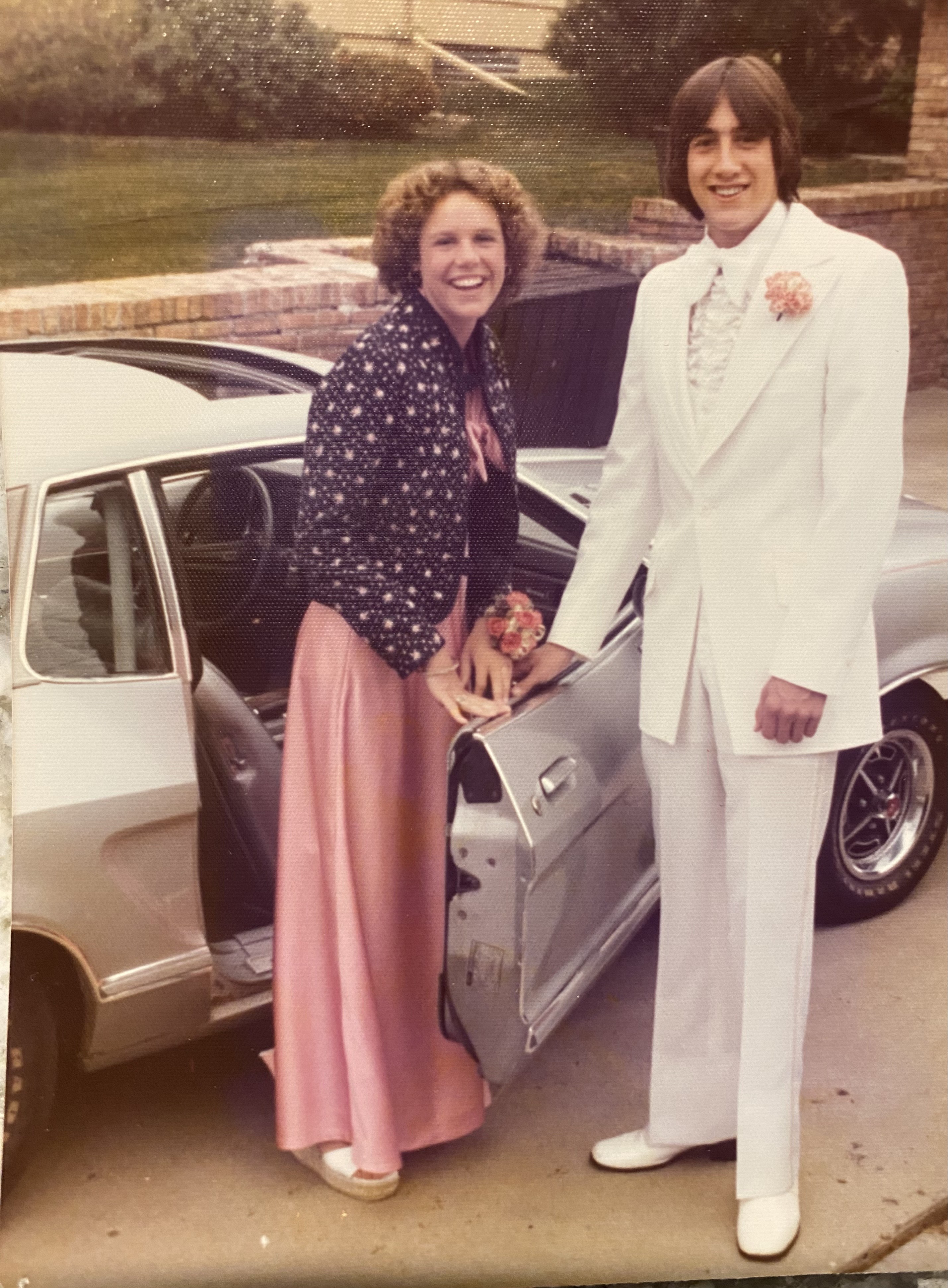
Their reconnection started with an email. While in Arizona escaping a Minnesota polar vortex in 2021, Orlady remembered it was Vulich’s birthday and looked her up online. He discovered that her husband, Tom, had died of Alzheimer’s. Orlady had lost his wife, Liz, to the disease a few years earlier. That email quickly led to nightly phone calls, just like they had done as teenagers — only now, they were several states apart, catching up on 30 years of life, love and loss.
“The shared losses, challenges, struggles, and suffering is an enormous part of our current connection,” Vulich said. “And what we found in each other was a comfortable place to openly talk and relish in what Liz and Tom brought to this world and the lives they touched.”
Years before, Vulich found herself managing two parallel challenges: caring for her husband, as well as losing her mother, who was also declining from Alzheimer’s disease. Living in Reno, Nevada, she struggled for years to get a diagnosis for Tom.
“The only way I could get a firm diagnosis was a nine-hour drive to Las Vegas,” she said. “Multiple trips, tests and scans eventually got us a diagnosis, and I was able to then get him on disability, which helped a little bit financially. But as his disease progressed, I did have to close my business to take care of him full-time.”
Tom was diagnosed in 2017 and died in 2019 at age 59. Orlady’s wife Liz, a pediatrician, was diagnosed earlier thanks to access to resources like the Mayo Clinic. She died at age 56 in 2012. Orlady has also lost his father-in-law to Alzheimer’s. The disease has touched multiple generations of both their families.
“I’m grateful that despite both of their parents being impacted by disease through the formative parts of their lives, my children are extremely productive members of society today,” said Orlady. “Now they’re in their 30s, and their mom was 49 when she had to stop working. I don’t want that for them.”
“We know what that looks like,” said Vulich. “We don’t want anybody to go through that. Yet it’s happening more and more as friends and acquaintances are getting diagnosed. It’s heartbreaking.”
Their shared experience of caregiving, grief, and resilience led them to the Alzheimer’s Association and AIM. Vulich was skeptical at first, unsure if she was ready to reopen old wounds. “In the back of my mind was ‘How can a sea of purple sashes fix anything?’”
But joining the AIM Leadership Society and attending her first AIM Advocacy Forum proved her wrong. As members of the Leadership Society, the philanthropic foundation of AIM, they learned about cutting-edge Alzheimer’s research and policy advancements that were making a difference for people impacted by the disease.
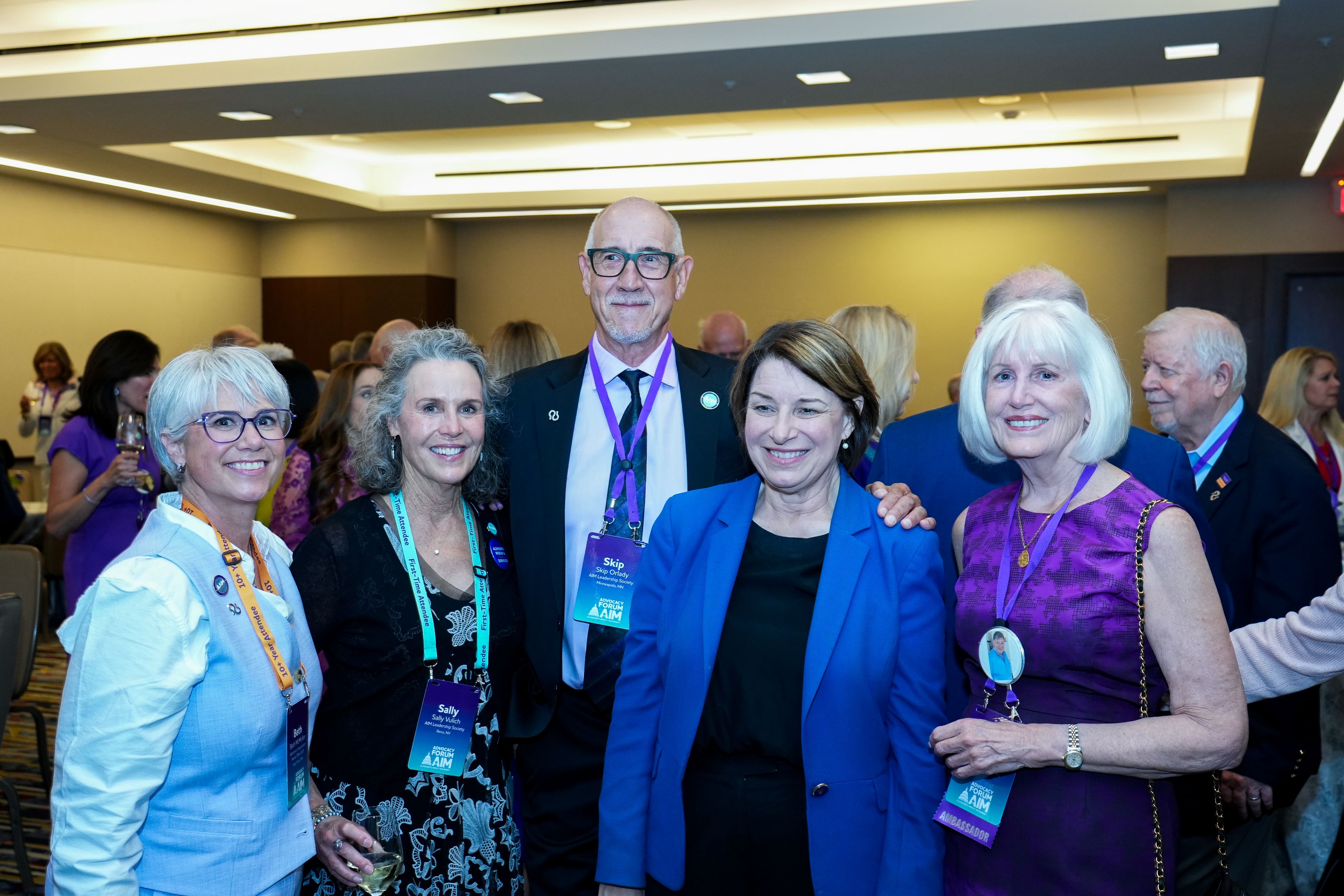
Reflecting on her experience at the Forum, Vulich quickly recognized the heightened impact of the Leadership Society. “With over a thousand advocates attending, being with this group allowed me to be front and center, and also gave me access to smaller group meetings where the information was more in-depth. Meeting longtime members and the hardworking staff behind it all…It’s really empowering to be surrounded by people making sense out of a disease that’s so senseless.”
In D.C., they saw firsthand how AIM builds relationships with congressional champions on both sides of the aisle, elevating the voices of all Alzheimer’s advocates and ensuring policymakers take action.
“With Skip alongside me, and my new support group [of fellow advocates] who totally get it, there’s no need for lengthy explanations to get those affirming nods of acknowledgment and understanding,” said Vulich. “After the death of my husband, I felt hopeless. Spending time with AIM’s wicked smart people, who work relentlessly to find answers and solutions, brought back hope. The hope I had lost was finally found.”
Orlady had attended the Forum several times before, but now, with Vulich by his side, their advocacy took on new meaning. They spent time with those from both Nevada and Minnesota and shared their powerful story with policymakers. Their bond is built on decades of friendship, love, and a shared mission. They know the devastation Alzheimer’s can bring — and they’re determined to make a difference.
“In D.C., many people said it many different ways: now’s not the time to slow down this progress; we’re so close,” said Orlady. “Sally said hope. I felt that as well. Let’s not tap the brakes…We’re all in.”