Beth McMullen
Each month, we’re featuring an advocate who engages with policymakers to ensure priorities that improve the lives of people impacted by Alzheimer’s and all other dementia remain top of mind in Congress.
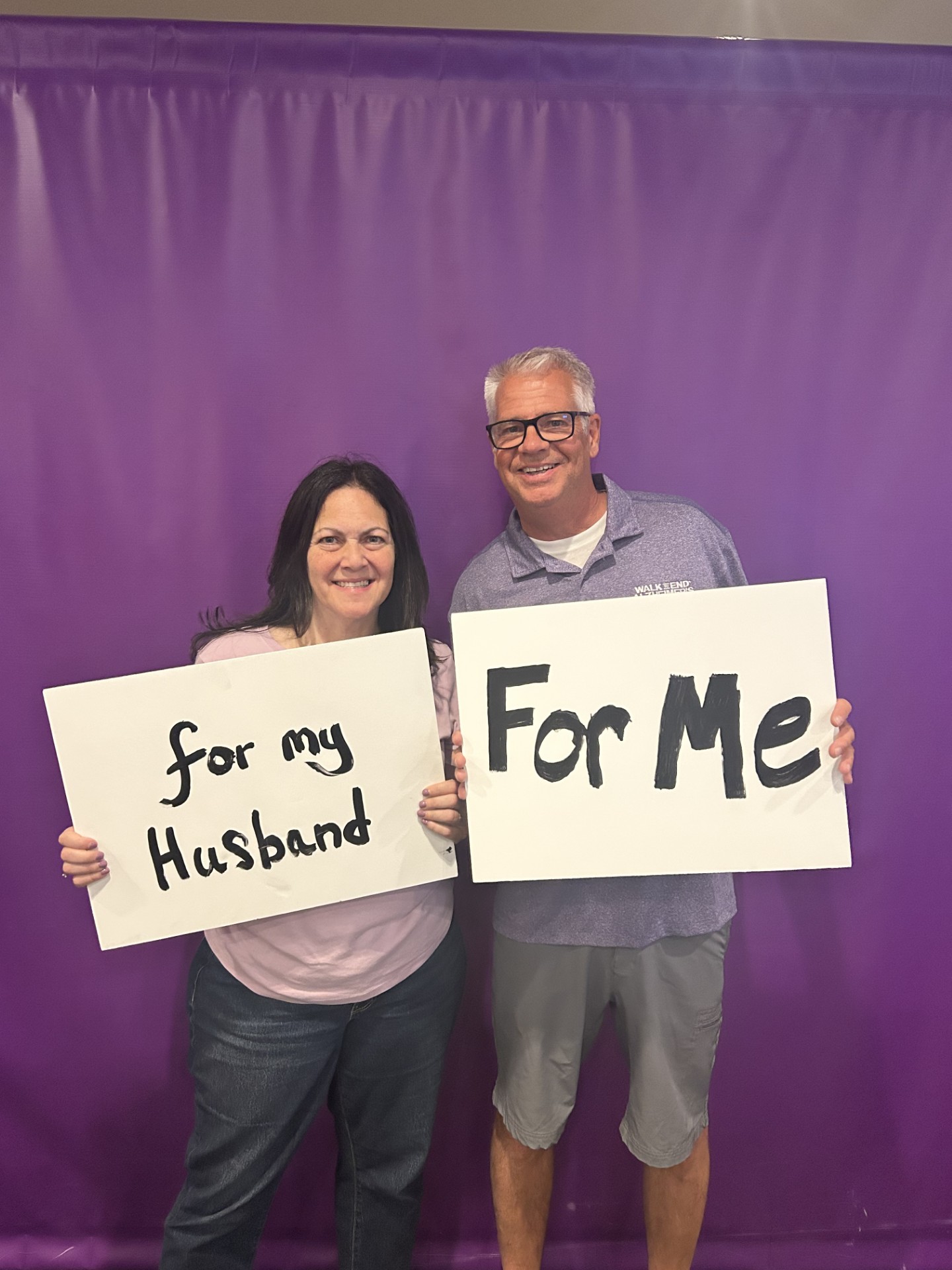
Before his Alzheimer’s diagnosis, Adam Nielsen spent his career in media, public service and lobbying on behalf of farmers in his home state of Illinois. After years of telling other people’s stories, Adam is using his skills to advocate for himself and the more than 7 million Americans living with the disease. Adam is often joined in that work by his care partner Dayna, who also worked as a journalist and now uses her skillset to advocate for Adam and her fellow care partners across the country.
“I feel like I have something to offer,” Adam said. “I know that my friends in Washington want to have a better understanding of this disease and how it affects people and families. Whatever I can bring to that discussion, I’m going to keep doing it until I can’t do it anymore.”
Adam’s Alzheimer’s journey began when he and Dayna noticed small changes. Adam became distant and quiet. He struggled to remember things. They reached out to their family doctor, but they were told it was probably just stress from Adam’s demanding job.
Their daughter, who was in college at the time, didn’t accept that. She urged them to keep trying to find an answer. That push led them to more cognitive tests and a referral for a neurologist. Because Adam and Dayna live in a rural area, they had to drive two hours to Chicago to see a neurologist. About two months after a spinal tap, Adam received his Alzheimer’s diagnosis at the age of 59.
Having careers that made them well known in their community, Adam and Dayna chose not to shy away from this. “We decided that we were going to live in the public eye with Alzheimer’s,” Dayna said. “We were going to show people how you live with Alzheimer’s. Your life’s not over the second you get a diagnosis.”
Adam’s parents lived with Alzheimer’s as well. They were hesitant to share their own diagnosis. He didn’t want to take that same approach. “It’s a lot scarier hiding it than being open. Not talking about it doesn’t change the disease,” said Adam.
When Rep. Darin LaHood (R-Ill.), a longstanding champion for the Alzheimer’s and dementia community, heard about Adam’s diagnosis, he recommended that Adam seek out the Alzheimer’s Association for support and resources.
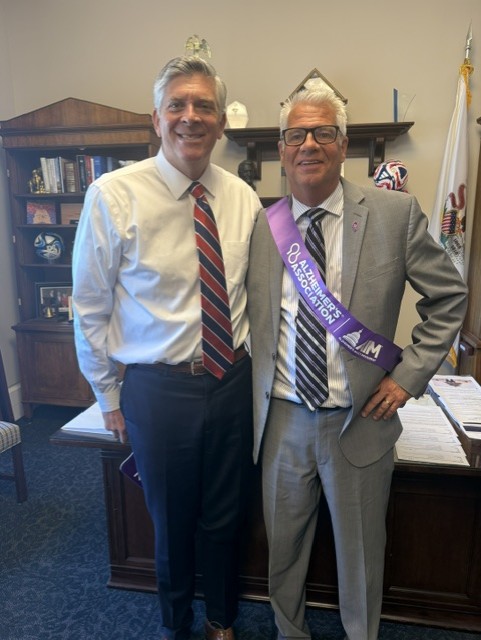
Adam retired from his job as a lobbyist six months after his diagnosis. A few months after that, Adam attended his first AIM Advocacy Forum in 2024 alongside Dayna.
Dayna was hesitant to go to D.C. so quickly after Adam’s diagnosis. “All those stereotypes about Alzheimer’s, I had them,” Dayna said, reflecting on her concerns. “I thought it’d be depressing. I did not want to go. But I knew how much he wanted to go.”
Dayna’s worries quickly dissolved when they arrived. “There was a lot of purple. It was like a celebration. We met people from all over the country. One guy we met [also] had Alzheimer’s and that was his tenth Forum. That gave me so much hope.”
The Advocacy Forum provided Dayna an opportunity to meet other spouses of people living with Alzheimer’s. “I’m seven years younger than Adam. People my age don’t typically have a spouse with Alzheimer’s,” said Dayna. “It’s just so nice to be in the presence of 1,000 people who understand what your life is like.”
The couple wasn’t yet through Capitol Hill security when someone recognized Adam from his previous lobbying work. A now retired congressman spotted Adam and started speaking with him. It was then that the lawmaker learned about Adam’s diagnosis and new advocacy efforts. Dayna knew then that Adam was where he needed to be.
“He is at his happiest when he is [advocating],” Dayna said.
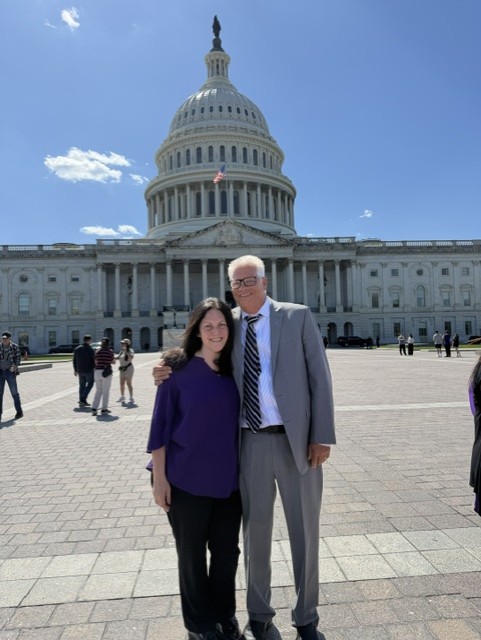
Adam has countless stories like this. He often bumps into elected officials and staff members he knew from his lobbying days. They’re used to hearing him talk about agriculture. But now he’s there advocating for himself and growing support for the bipartisan Alzheimer’s Screening and Prevention (ASAP) Act, which recently made an important step in the legislative process when it was unanimously passed out of the House Ways and Means Committee.
Since joining the fight to end Alzheimer's, Adam and Dayna have developed and maintained strong relationships with Illinois lawmakers, including Reps. LaHood, Eric Sorensen and Nikki Budzinski, all of whom have cosponsored the ASAP Act.
Having to deal with a spinal tap to get a diagnosis was daunting for Adam and Dayna. They’re worried that others may delay their own diagnosis due to fear of having the disease, having to go through an intrusive procedure like a spinal tap and the costs associated with it.
“[Blood tests] open the door for so many people,” Dayna said. “Not everyone, particularly if you’re living in a rural area, can just go and get a spinal tap. People should have the ability to know.”
Adam recognizes that not every advocate starts with his connections or comfort speaking in front of others. He offers some simple advice for those who want to try advocacy but haven’t done so before, “It’s your story. You can’t tell it wrong.”
If you’re ready to tell your story, become an advocate today and help AIM keep advancing critical bipartisan legislation like the ASAP Act.